Back
Back
- Back
- Dental
Shop Henry Schein for the best selection of Dental Supplies.





















- Back
- Equipment Medical









- Back
- Sales and Promotions - Medical
Shop Henry Schein for the best Sales & Promotions.
- Back
- Zahn - Digital Workflow
Shop Zahn Dental for the best selection of Digital Workflow solutions.






















Find the Right 3D Printer
Technology continues to drive progress across all areas of life, and three-dimensional (3D) printing is one of the most impactful advancements in digital dentistry. For dental laboratories, adopting 3D printing is no longer optional, it’s essential for staying competitive. These solutions streamline workflows, automate labor-intensive tasks, and maintain high-quality output while reducing production time and costs. By investing in a 3D printer, your lab can future-proof its operations, adapt to increasing demand, and stay ahead as the industry continues to shift toward fully digital workflows.
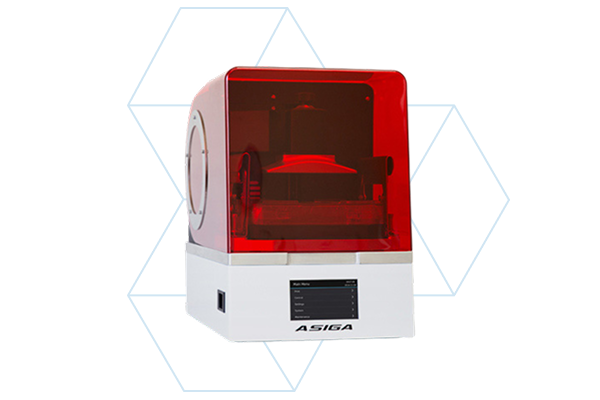
What Is Dental 3D Printing?
Dental 3D printing is a digital manufacturing process that uses CAD/CAM technology to produce dental devices layer by layer. It allows dental laboratories to quickly and efficiently fabricate items like dentures, models, surgical guides, nightguards, splints, impression trays, and both temporary and permanent restorations. By replacing analog methods, 3D printing helps labs modernize their workflows and improve turnaround times.
What Can a Dental 3D Printer Produce?
Dental 3D printers empower laboratories to fabricate a wide range of treatment devices quickly and efficiently—all in-house. This technology streamlines production, reduces turnaround times, and maintains the high-quality standards labs are known for.
3D Printed Dentures
Producing a set of dentures has always been a multi-step, manual process that starts with impressions. Digital dentures can now be printed in mere hours thanks to 3D printing technology. This allows labs to produce and return the dentures to the dental office in a significantly quicker timeframe with higher strength and fantastic esthetics.
Tips on Choosing a 3D Printer
Selecting the right 3D printer for your dental lab depends on several key factors, including printing technology, material compatibility, accuracy, and production volume.
The two most common 3D printing methods in dentistry are Stereolithography (SLA) and Digital Light Processing (DLP).
- SLA uses a laser to cure resin layer by layer, creating highly accurate prints with smooth surface finishes. Variants like Low Force Stereolithography (LFS) improve part accuracy and make removal from the resin tank gentler and more precise.
- DLP uses a digital projector to cure entire layers at once, resulting in faster print times and excellent detail.
While both methods produce high-quality dental devices, differences in cost, speed, resolution, and compatible materials depend more on the specific printer model than the technology itself.
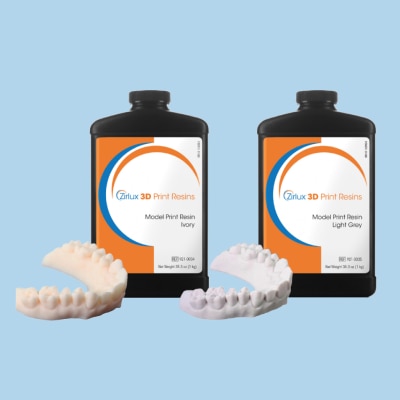
3D Printing Resins
Find premium dental 3D printing resins from top brands like Asiga, Dentsply Sirona, and Keystone. Achieve high precision, fast production, and superior strength for digital dentures, models, and restorations.
What is a 3D printer used for in a dental lab?


What types of 3D printing technologies are used in dentistry?
How accurate are 3D printers?
Are 3D printers cost-effective for labs?
Can I 3D print teeth?
How much does a 3D printer cost?

23ZS2608_3DPrinterChecklist